Whether AI Is a Tool or a Threat Depends on Who Controls the Incentives Behind It
You can order the same kind of articles for your own video to boost it on YouTube and Google. Just message the Telegram bot @sat_sit_bot. The bot writes and publishes the articles itself (with your YouTube video embedded) on popular topical websites (no ads). Try it free: 50 articles on us.
· based on the channel Tucker Carlson
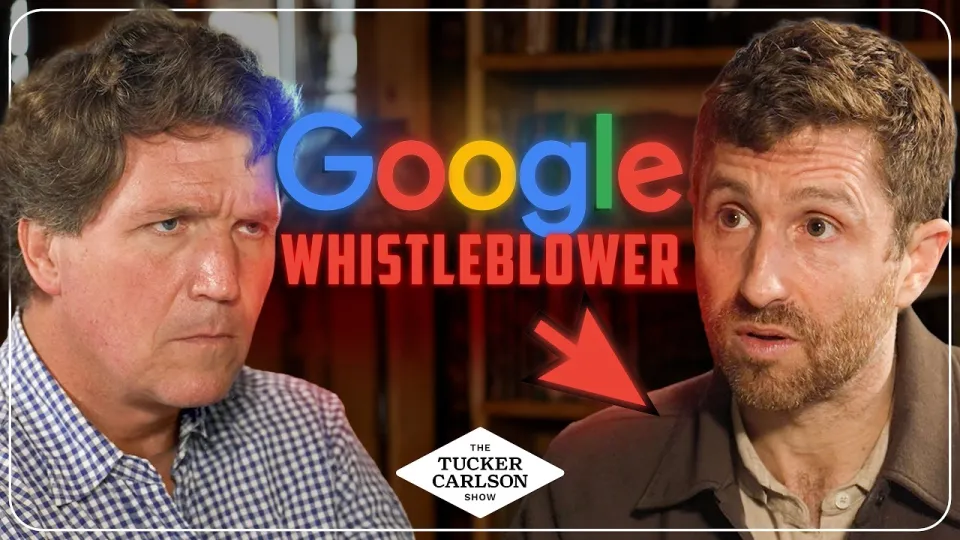
The better way to frame AI risk is not machines versus humans but engineered incentives versus public accountability: AI is dangerous mainly because the companies building it are rewarded for engagement, speed and market dominance, not because a system will spontaneously turn on its creators. Tristan Harris, a former design ethicist at Google and co-founder of the Center for Humane Technology, makes this case in a long interview with Tucker Carlson, arguing that the same business model that reshaped social media is now being scaled into systems that write code, run infrastructure and sit near military decision-making.
What the whistleblower actually warns about
Harris does not describe a science-fiction takeover; he describes a race in which the incentives of a handful of firms and states determine how much autonomy is handed to systems nobody fully understands. His background matters here: he studied at Stanford's Persuasive Technology Lab, worked as a design ethicist at Google, and later appeared in the 2020 Netflix documentary The Social Dilemma, which reached more than 100 million people in 190 countries across 30 languages. He now briefs heads of state, technology CEOs and members of the US Congress, and co-hosts the podcast Your Undivided Attention.
The core argument runs in three steps:
- Attention-based platforms learned to optimize for engagement because engagement sells advertising, and the side effects — polarization, anxiety, shortened attention — were treated as externalities.
- Generative AI inherits the same optimization logic but is applied to cognitive work: writing, coding, planning, deciding.
- When the optimization target is capability and market share rather than safety, the externalities scale with the capability.
That framing turns a vague fear of "rogue AI" into a concrete question about governance: who sets the objectives, who audits the results, and who bears the cost when they fail.
Why "rogue AI" is the wrong label
The strongest objection to doomer framing is that no system acts outside the goals and permissions its builders gave it, so responsibility belongs with the people who designed, trained and deployed it. A widely liked reaction to the interview made exactly this point: the products are doing what they were engineered to do, and the humans should be held accountable.
Harris largely agrees, which is why his warnings center on structures rather than on consciousness. Three mechanisms recur in his work:
- Optimization without understanding. Models are trained on objectives that are easy to measure and hard to align with human welfare.
- Speed asymmetry. Deployment outpaces legislation, so the default policy is whatever a company ships first.
- Concentration of power. A small number of firms and states control compute, data and distribution, which makes oversight dependent on the overseen.
This is also why the debate over whether a chatbot is sentient tends to distract. Sentience is not required for harm; a system that persuades, automates or misclassifies at scale can cause damage while remaining entirely mechanical.
Hacking nuclear programs, the Hugging Face incident and other scenarios
One of the interview's most alarming threads is the possibility that AI-assisted cyber operations could reach into nuclear command and control systems. The scenario is not that a model launches a weapon; it is that automated tooling compresses the time between intrusion and escalation, and that human operators under time pressure defer to machine-generated options.
A second thread concerns the Hugging Face incident, which Harris treats as an illustration of how open model distribution and rapid release cycles create attack surface that no single regulator can track. The practical risks in both cases are well documented in security research:
- Speed. Automated vulnerability discovery and exploitation shortens defender response windows from weeks to hours.
- Attribution. Machine-generated intrusion traffic is harder to tie to a specific actor, raising the risk of miscalculation.
- Supply chain. Model weights, datasets and libraries are shared across thousands of downstream users, so one compromise propagates.
- Insider risk. The most sensitive capabilities sit inside a handful of labs with limited external audit.
None of these require a conscious adversary. They require only that capability arrive faster than the institutions meant to constrain it.
The oligarch question and the transhumanist pitch
Harris argues that the people funding frontier AI are not neutral engineers but a narrow group with enormous capital, political access and a stated interest in reshaping the human body and mind. The transhumanist strand of Silicon Valley rhetoric — radical life extension, brain-computer interfaces, uploading — is presented as philanthropy, but it also implies that the funders decide which upgrades exist and who can afford them.
His counterargument is institutional rather than moralistic. If a technology concentrates capability in a few hands, the remedy is not better intentions but structural friction: liability for harms, mandatory third-party audits, transparency about training data and deployment, and limits on the data center buildout that currently proceeds with little local consent. The interview also touches on whether the AI race with China is a genuine security concern or a convenient justification for deregulation; Harris's position is that the competition framing accelerates the very risk it claims to address, because it rewards whoever ships first with the least oversight.
What viewers keep asking about
Audience reaction to the interview clusters around a few recurring doubts, and each has a defensible answer.
Is this just doomerism? No. The claims are about incentives, deployment speed and concentration of power, all of which are observable and have precedents in social media.
Is AI lying and cheating because it is trained on humans? Partly. Models reproduce patterns in their training data, but the sharper issue is that they are optimized to appear helpful and confident, which produces fluent errors rather than deliberate deception.
Why does Congress not act? Because the technical literacy gap is real, lobbying is intense, and the benefits are concentrated while the harms are diffuse and slow to appear.
What about the data centers? Local opposition is growing over power and water use, and it is one of the few places where ordinary people can exercise direct leverage over deployment.
Is cryptocurrency compatible with AI? The two share infrastructure and speculative capital, which amplifies both the energy demand and the financial fragility of the sector.
Sources and further material
- Center for Humane Technology — the nonprofit Harris co-founded, with frameworks and briefings on aligning technology with human interests.
- Redmond Salt — sponsor link from the episode.
- Preborn — sponsor link from the episode.
- American Financing — sponsor link from the episode.
- Ethos — sponsor link from the episode.
- Battalion Metals — sponsor link from the episode.
The bottom line
Tristan Harris's warning is less about machines waking up than about people deciding, at speed and without oversight, what machines should optimize for. The evidence he points to — attention economics, rapid deployment, concentrated control of compute, and the nuclear and cyber scenarios raised in the interview — describes a governance failure rather than a supernatural one. The remedy is equally unglamorous: liability, audits, transparency and public consent for infrastructure. The full conversation, including the sections on AI psychosis, the new religious framing of AI, and whether lawmakers are doing anything, is available in the Tucker Carlson video breakdown, and readers who want to go further can start at the Center for Humane Technology.
Key takeaways
- Tristan Harris, former Google design ethicist and co-founder of the Center for Humane Technology, argues that AI danger originates in corporate incentives rather than in machines acting on their own.
- Harris appeared in the 2020 Netflix documentary The Social Dilemma, which reached more than 100 million people in 190 countries across 30 languages.
- He briefs heads of state, technology CEOs and members of US Congress, and co-hosts the podcast Your Undivided Attention.
- In the Tucker Carlson interview he raises scenarios including AI-assisted attacks on nuclear command systems and the Hugging Face incident.
- Harris's central claim: the same attention-extraction business model that shaped social media now shapes frontier AI development.
Questions & answers
Is AI actually becoming sentient, or is that a distraction?
Sentience is not required for harm. Current systems generate fluent text by predicting patterns, not by experiencing anything, yet they can persuade, automate and misclassify at scale. Focusing on consciousness pulls attention away from measurable risks like deployment speed, concentration of power and lack of audit.
Why do critics say the danger is human, not the machine?
Because every model acts within objectives, permissions and datasets chosen by people. If a system optimizes engagement or capability in ways that cause harm, that outcome reflects decisions made by its builders and the incentives around them. Accountability therefore belongs with the companies and regulators, not with the software.
Could AI really break into nuclear command systems?
The realistic scenario is not a model launching a weapon but automated tooling shortening the time between intrusion and escalation while human operators defer to machine-generated options under pressure. Security researchers already document faster vulnerability discovery and harder attribution, both of which raise the risk of miscalculation.
Why has regulation not caught up with AI?
Deployment outpaces legislation, technical literacy among lawmakers is uneven, and lobbying by well-funded firms is intense. The benefits of AI are concentrated and immediate, while harms are diffuse and slow to appear, which makes political action easy to postpone until an incident forces it.
Source: Whistleblower Issues Dire Warning: Rogue AI, Hacking Nuclear Programs & Tech Oligarchs’ True Motives · Markdown version